Free Speech Is America’s Radical Idea And Big Tech Must Defend It
By David Henson | Citizen Octopus
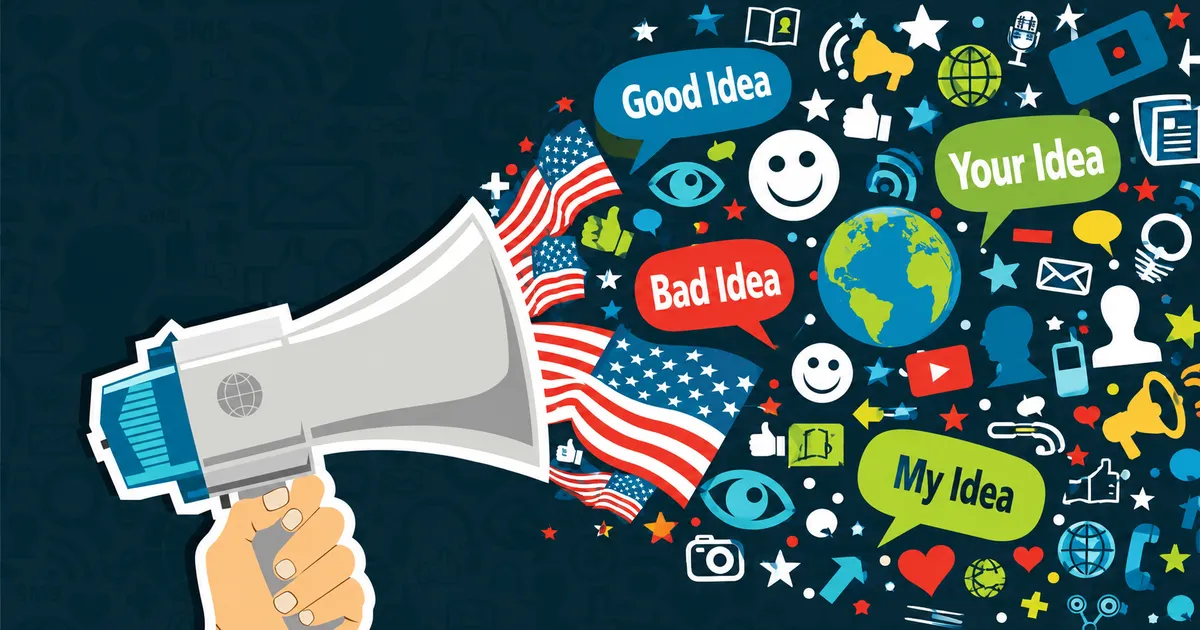 The United States was founded on an idea so radical that much of the world still does not fully accept it: that human beings should be broadly free to speak, criticize, argue, offend, publish, dissent, and challenge authority without centralized control over thought itself.
The Declaration of Independence and the United States Constitution were not merely documents establishing another government. They were declarations that individual liberty, including political speech, stood above the comfort of rulers and above the desire of societies to silence dangerous or unpopular ideas.
This was not an accidental oversight by the founders. They understood the risks.
They knew free speech would produce lies, conspiracy theories, insults, political extremism, social unrest, and deeply offensive speech. The early American press was often vicious and reckless. The founders lived through rumor campaigns, political rage, foreign influence efforts, and open attacks on public officials.
And yet they still built a system centered around unusually broad speech protections because they believed something even more dangerous existed: centralized control over ideas.
The American system was radical precisely because it accepted the costs of liberty.
Two hundred and fifty years later, the results have not been too bad.
The United States became:
- one of the most innovative societies in human history,
- the center of enormous scientific and technological advancement,
- a magnet for entrepreneurs, thinkers, dissidents, and creators,
- and the dominant force in global media and communications.
America’s openness was not incidental to this success. It was one of the engines of it.
The Global Speech Contradiction
Now we are entering a new era where global technology companies function as the speech infrastructure of humanity itself. Platforms created in America increasingly determine what billions of people can see, say, discuss, criticize, or question.
And here lies the growing contradiction.
American companies, while benefiting from American markets, American capital, American legal protections, and American constitutional culture, increasingly comply with foreign censorship demands around the globe.
- Apple restricts applications and content in certain markets.
- Meta adapts moderation systems across jurisdictions.
- Google has repeatedly faced pressure to alter information access based on local political requirements.
Meanwhile, regulatory systems such as those emerging from the European Union increasingly shape worldwide speech moderation standards because platforms often prefer one global rulebook rather than maintaining separate systems country by country.
This creates a profound long-term problem for the United States.
Speech is now global. Americans inevitably hear filtered global discourse. Foreign censorship norms do not remain overseas. Once American companies normalize broad restrictions abroad, those standards eventually flow back into American life through moderation systems, institutional habits, algorithmic filtering, and internationalized definitions of “acceptable” speech.
A constitutional right can erode culturally long before it erodes legally.
The American Line
Many argue this trend is unavoidable because companies must comply with local laws in order to operate globally. But that argument assumes global market access is more important than maintaining America’s foundational principles.
Perhaps it is time for the United States to draw a line.
If corporations wish to be domiciled in the United States and benefit from:
- American corporate protections,
- American financial markets,
- American infrastructure,
- American consumers,
- and the stability created by the American constitutional system,
then they should uphold American free speech principles globally, particularly regarding political speech.
This would not necessarily harm American companies. In fact, it could strengthen them.
Today, global technology firms face endless pressure from governments demanding speech restrictions. But if American law established a clear free speech standard tied to corporate domicile or legal protection, companies could simply say:
“We cannot legally impose viewpoint-based political censorship beyond narrow American standards.” That would shift the burden away from corporate executives making ad hoc political decisions and back toward a clear constitutional principle.
The Founders Already Answered This Question
Yes, there would be costs.
Some countries might restrict access to American platforms. Some revenue could be lost. The internet itself could become more fragmented.
But the founders understood costs too.
The American experiment has always rested on a dogmatic belief that liberty is worth the risk. The nation was built on the idea that the dangers of free people speaking openly are still less dangerous than centralized systems controlling thought.
That belief was radical in 1776.
It remains radical today.
And it may be one of the last distinctly American ideas powerful enough to shape the future of the digital world.
~David Henson, Citizen Octopus
About the Author
David Henson is an inventor, publisher, writer and founder of Citizen Octopus, a site focused on analyzing systems, incentives, and how information shapes perception.