Kharg Island and How Iran Went From America’s Ally to America’s Foe
How Iran Went From the Shah to the Islamic Republic
Kharg Island, oil wealth, mosques, and the long path from monarchy to revolution
For many Americans, Iran often appears in the news as a hostile regime, a nuclear power concern, or a source of instability in the Middle East. But Iran’s modern history is more complicated than that.
Just a few decades before the Islamic Revolution, Iran was one of the closest allies of the United States in the region. It had enormous oil wealth, Western investment, a rapidly modernizing economy, and grand ambitions.
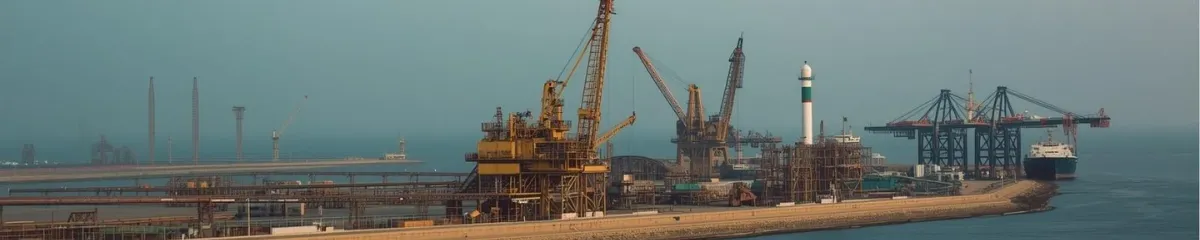
One of the clearest symbols of that era was Kharg Island.

Kharg Island and the Shah’s Oil Empire
Kharg Island became the center of Iran’s oil export system during the reign of Shah Mohammad Reza Pahlavi. In the late 1950s and early 1960s, Iran used oil revenue — along with American expertise, engineering, and business partnerships — to build one of the largest oil terminals in the world.
American firms, including Amoco, played major roles in helping construct and operate facilities on the island. By the 1970s, Kharg Island had become one of the most important oil export hubs on earth.
In many ways, Kharg represented the Shah’s broader vision for Iran:
- Modern
- Industrial
- Rich from oil
- Closely tied to the West
- Ambitious and internationally connected
But there was another side to that story.
Why People Turned Against the Shah
The Shah modernized Iran rapidly, but not everyone benefited equally.
Many people saw the ruling class in Tehran as increasingly disconnected from ordinary Iranians. The Shah’s inner circle was viewed as wealthy, Westernized, urban, and out of touch with traditional values.
At the same time, the government used repression to control dissent. SAVAK, the Shah’s feared intelligence service, was known for surveillance, arrests, and harsh treatment of opponents.
Political parties were weak. Independent labor unions were restricted. Opposition newspapers struggled. But there was one institution the Shah never fully controlled:
The mosques.
Mosques became one of the few places where people could gather, share information, organize protests, and build networks. Clerics and religious leaders often came from smaller towns, traditional communities, and religious schools, giving them deeper roots in ordinary Iranian life.
Meanwhile, many of the Shah’s supporters were concentrated in the urban elite of Tehran.
That made it easier for revolutionary leaders to frame the conflict as “real Iran” versus an out-of-touch elite.
The Revolution Was Not Really Communist
Some parts of the Iranian Revolution sounded socialist.
The revolution attacked wealthy elites, foreign influence, corruption, and inequality. It supported nationalization and promised to stand up for ordinary people.
But the revolution was never truly communist.
The coalition against the Shah included Islamists, leftists, students, workers, merchants, and intellectuals. Once the Shah was gone, the Islamic clerics eventually pushed aside most of the secular and left-wing factions.
What emerged was not a Marxist state, but an Islamic theocracy.
Did the Revolution Help Ordinary People?
The answer depends on what you compare it to.
Compared to Iran before the revolution, many ordinary people gained access to better education, healthcare, electricity, roads, and water — especially in rural areas.
Iran became relatively well educated by regional standards. It developed strong engineering, scientific, and medical programs. Women entered universities in large numbers.
At the same time, Iran also suffered through:
- The Iran-Iraq War
- Sanctions
- Capital flight
- Isolation
- Corruption
- Brain drain
- Political repression
The country today is probably poorer, less free, and less globally connected than many people think it could have been.
Still, comparing Iran to smaller Gulf countries like Qatar or the UAE can be misleading. Iran has a population of around 90 million people, so its oil wealth has to stretch much further.
Iran also has a more diverse economy than many Gulf states. In addition to oil, it has agriculture, manufacturing, automotive production, mining, steel, food production, and a large internal consumer market.
Kharg Island After the Revolution
After the 1979 revolution, the new Islamic Republic nationalized Kharg Island and forced foreign firms like Amoco out.
Iran kept the infrastructure, expanded it, and continued using Kharg as the center of its oil exports.
In a way, Kharg Island tells the whole story of modern Iran.
It was built during the Shah’s pro-Western period, financed by oil wealth, developed with foreign help, seized during the revolution, and then used by the Islamic Republic for decades afterward.
The same island served both regimes.
Final Thought
The most interesting question may not be whether the Shah or the Islamic Republic was “better.”
The important question is whether Iran could have modernized without a complete revolutionary break.
Could Iran have become something more like Spain, Jordan, or South Korea, a country that kept modernizing while gradually becoming more politically open?
Instead, Iran went from one form of authoritarian rule to another.
Kharg Island remains standing as a reminder of both eras.