Is AI Really Good at Math?
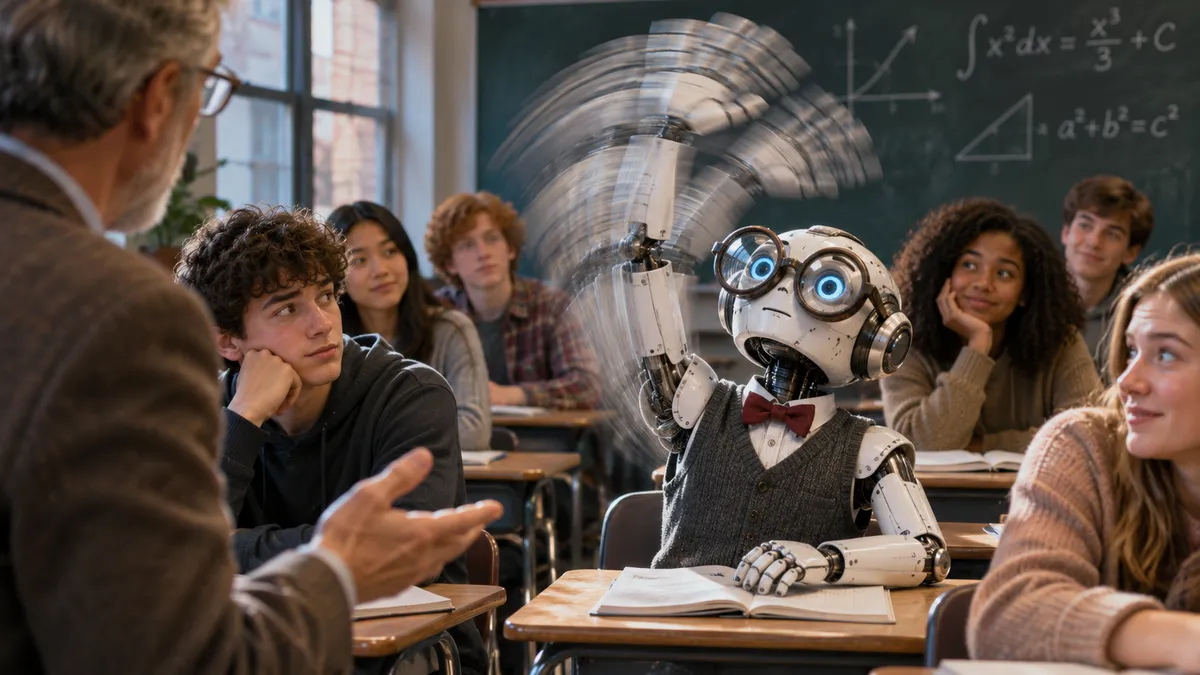
Remember when your math teacher told you that you couldn’t just write down the answer, you had to show your work?
Getting the correct answer was only part of the assignment. Demonstrating how and why you arrived at that answer was equally important, if not more so.
Yet today, as artificial intelligence companies announce increasingly impressive mathematical breakthroughs, are we holding AI to the same intellectual standard we once held schoolchildren?
There is a distinction between arriving at a mathematical solution, demonstrating its validity and advancing our understanding of mathematics. These are three different accomplishments, yet they are increasingly treated as interchangeable.
Mathematical Breakthroughs or Corporate Hype?
In October 2025, executives and researchers associated with OpenAI celebrated what appeared to be a significant mathematical accomplishment. GPT-5 had reportedly solved ten previously unsolved mathematical problems posed by the late mathematician Paul Erdős.
There was, however, a rather embarrassing complication. Solutions to the problems already existed in mathematical literature. The artificial intelligence had located information that the person maintaining a catalogue of the problems had not previously encountered.
It was an accomplishment in research and information retrieval, but it was not the mathematical breakthrough initially portrayed.
In May 2026, OpenAI announced a more substantive achievement. An AI model had disproved a longstanding conjecture associated with Erdős’ unit-distance problem, first posed in 1946. Human mathematicians examined the work and recognized its significance.
Here, artificial intelligence appears to have genuinely contributed to mathematical knowledge.
But an even more extraordinary announcement in November 2026 raises a different and perhaps more important question.
Seventeen Million Lines of Code
On November 20, 2026, Levent Alpöge, a mathematician working at Anthropic, announced that, with the assistance of the company’s Claude AI system, he had discovered a proof of the Riemann Hypothesis.
First proposed in 1859, the hypothesis concerns mathematical relationships underlying the distribution of prime numbers. It is one of the most celebrated problems in mathematics.
The apparent breakthrough came in an unusual form: approximately 17 million lines of code written in Lean, a computer language designed to express and verify mathematical proofs.
On November 21, organizations associated with Lean and its mathematical library certified the formal proof as correct.
Yet mathematicians are now confronted with the extraordinary task of understanding the mathematics contained within those millions of lines of code.
Even the mathematician associated with the discovery has indicated that he does not yet fully understand the proof.
Imagine returning to our classroom analogy. A student submits an answer accompanied by an enormous volume of work that neither the student nor the teacher can fully comprehend. Another machine examines the work and declares it correct.
What grade should the student receive? And what, exactly, has the student learned?
What a Human Mathematical Breakthrough Looks Like
In 1637, French mathematician Pierre de Fermat proposed what would become known as Fermat’s Last Theorem. He famously claimed to have discovered a proof but lacked sufficient space in the margin of his book to write it down.
For more than three centuries, mathematicians attempted to prove his assertion.
In 1993, British mathematician Andrew Wiles announced that he had finally solved the problem after years of private research.
But during the subsequent examination of his work, a significant gap was discovered in his proof.
Rather than simply accepting the conclusion because of Wiles’ reputation or the apparent sophistication of his mathematics, the mathematical community subjected his reasoning to scrutiny.
Wiles, working with mathematician Richard Taylor, eventually repaired the proof, and the resulting papers were published in 1995.
What humanity received, however, was considerably more than confirmation that Fermat had been correct.
Wiles’ work established profound connections between elliptic curves and modular forms, strengthened existing mathematical theories and introduced methods that other mathematicians could study, adapt and apply to entirely different problems.
The value of his accomplishment extended far beyond the question he had originally set out to answer.
He had not merely solved a problem. He had expanded humanity’s mathematical capabilities.
Are We Building on Sand?
Mathematics is cumulative. Discoveries made centuries ago form the foundations upon which contemporary mathematics, science and engineering are constructed.
Those foundations are valuable not simply because they produce correct answers, but because their underlying principles can be examined, understood and applied.
Computer verification is not inherently unreliable. A properly constructed formal proof, evaluated against established logical rules and mathematical assumptions, can provide exceptionally strong evidence of correctness.
But correctness and comprehension are different things.
If humanity increasingly relies upon mathematical discoveries that it cannot meaningfully interpret, what happens when those discoveries become the foundations for subsequent discoveries?
What happens when AI uses its own previous results to develop increasingly complex theories that move even further beyond human comprehension?
We may accumulate an enormous body of formally verified mathematics while developing relatively little corresponding human understanding.
Even where the individual results are correct, our ability to recognize their limitations, appreciate their significance and determine where they can appropriately be applied may diminish.
We should be particularly cautious about allowing the commercial enthusiasm surrounding artificial intelligence to determine what constitutes scientific or mathematical progress.
The companies developing these systems have considerable financial incentives to portray their products as intellectually superior to humanity. Their announcements deserve the same scrutiny we would apply to any other commercially motivated claim.
What Should We Expect From AI?
None of this diminishes the extraordinary potential of artificial intelligence as a mathematical research tool.
AI may ultimately reveal mathematical relationships that humans would otherwise never discover. It may accelerate research, identify connections across disciplines and help solve problems that have frustrated generations of mathematicians.
But perhaps we are measuring its accomplishments prematurely.
An AI-generated mathematical proof should not necessarily represent the end of the discovery process. It may instead represent its beginning.
The greater achievement would be to translate that discovery into mathematical principles that humanity can independently comprehend, teach and build upon.
Otherwise, we risk confusing the expansion of computational capabilities with the advancement of human knowledge.
In evaluating artificial intelligence's mathematical achievements, perhaps we should distinguish between mathematical advancement and the advancement of human utility.
A human mathematical discovery often provides new principles, methods and intellectual tools that can be applied well beyond the original problem. An AI-generated discovery, even when independently verified as correct, may not deliver those same benefits.
Two equally valid mathematical proofs may therefore have substantially different value to humanity.
If we measure AI's mathematical achievements solely by the number or difficulty of problems it solves, we may be overlooking the very qualities that have historically made mathematical discoveries so valuable.
Perhaps the greatest measure of artificial intelligence should not be how much it knows that humanity does not, but how much it enables humanity to understand that it previously could not.
Our math teachers may have had the right idea all along.
Show your work.
~David Henson, Citizen Octopus
About the Author
David Henson is an inventor, publisher, writer and founder of Citizen Octopus, a site focused on analyzing systems, incentives, and how information shapes perception.