Trump’s Biggest Deal Ever?
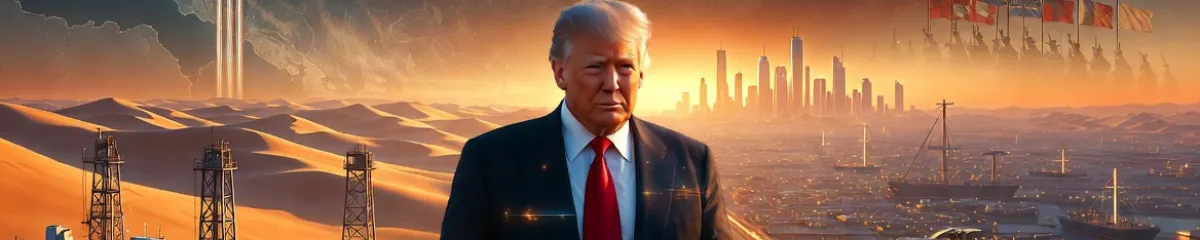 Donald Trump has just opened the door to the biggest deal of his career: far bigger than real estate, trade, or even the Abraham Accords.
The military part of Iran War was always the easier phase. The harder phase is what comes next.
Trump will need to channel Calouste Gulbenkian and Gustavus Adolphus.
Calouste Gulbenkian, known as “Mr. Five Percent,” helped shape the modern Middle East by brokering oil deals across competing nations and ensuring that all sides had a reason to participate. He understood that the greatest deals are not simply about defeating an opponent; they are about building a structure where everyone has enough to gain that the arrangement can endure.
Gustavus Adolphus, the great Swedish king and military innovator, became famous not only for winning battles but for using speed, discipline, and decisive force to reshape the balance of power in Europe. He showed that military success can create opportunities that diplomacy alone never could but only if those opportunities are used wisely afterward.
Iran now sits at a crossroads. One path leads toward continued sanctions, isolation, militarization, and a weakened economy dominated by the Islamic Revolutionary Guard Corps. The other path leads toward a very different future: investment, tourism, technology, manufacturing, energy development, aviation, and reintegration into the world economy.
Iran has enormous potential:
• Nearly 90 million people • A highly educated population • Massive oil and natural gas reserves • Strong manufacturing capacity • A wealthy and influential diaspora • One of the most strategic locations in the world
Iran also has something many people underestimate: a young, educated population with unusually high university enrollment and literacy levels for the region. Iran has one of the highest tertiary education rates in the world, a very large number of engineers and STEM graduates, and youth literacy rates approaching universal levels. In many ways, Iran is not a poor or backward country - it is a suppressed country. Much of its potential has been trapped by sanctions, ideology, corruption, and isolation.
A more open Iran could become one of the most important emerging economies of the next generation. Some analysts have even described it as a trillion-dollar opportunity for the United States and the global economy.
That is why the real question is no longer who won the war.
The real question is whether Trump can turn a military victory into a long-term economic and political deal.
To do that, he will need to harness the motivations of the other major players.
The Arab states, especially Saudi Arabia, the United Arab Emirates, Qatar, Oman, and Egypt likely do not want Iran to collapse into chaos. They want a weaker, more pragmatic Iran that stops funding militias and destabilizing the region, but they also want stable shipping lanes, lower risk of war, and new economic opportunities. Gulf countries could play a huge role in reconstruction, investment, and helping bring Iran back into the regional economy.
China is likely even more transactional. China wants stable oil supplies, safe shipping lanes, and a calmer Middle East. China already buys most of Iran’s oil and has long viewed Iran as strategically useful. An Iran deal for China is less about face and more about China’s stability, trade, and energy security.
Russia is different. Russia benefits more from instability, higher oil prices, and a Middle East that distracts the United States. Russia is still an important geopolitical player, but its economic importance is far smaller than its military reputation. Russia may try to slow down any agreement that pulls Iran closer to the global economy and farther from Moscow’s orbit. Europe would likely welcome a more open Iran as well. European countries want lower energy costs, reduced migration pressure, less terrorism, and new markets for trade and investment. Even inside Iran, there are likely different camps. Some hardliners in the Islamic Revolutionary Guard Corps may want continued confrontation. But more pragmatic figures may realize that their best chance to preserve wealth, power, and personal safety is to help guide a transition rather than resist it forever.
The most important piece of the puzzle may be that the outside world must be willing to let Iran win too.
Iran cannot simply be humiliated, boxed in, and expected to remain stable forever. If the United States, Israel, China, Europe, and the Arab states want a durable peace, they may need to offer Iran a face-saving path toward becoming a respected, prosperous regional power.
That means Iran would have to give up certain ambitions: no nuclear weapons, less support for militias and terrorism, fewer regional threats, and a gradual reduction in the power of hardliners.
But in return, Iran could receive something much more valuable:
• Sanctions relief • Foreign investment • Rebuilding assistance • Access to global markets • Tourism • Energy development • Technology transfers • Aviation, telecom, and manufacturing growth • A chance to become one of the great economic success stories of the next generation
Iran’s victory would not come from exporting revolution or threatening the Strait of Hormuz. Iran’s victory would come from becoming a larger version of Turkey or South Korea. A country that is respected because it is prosperous, educated, connected, and economically important.
The upside is enormous. A more stable Iran could mean:
• Lower energy prices • Safer shipping through the Strait of Hormuz • Less regional warfare • Less terrorism • More trade and investment • A stronger world economy • A possible renaissance inside Iran itself
The failure scenario is equally clear. If Iran simply rebuilds its missile networks, doubles down on hardliners, and remains trapped in sanctions and isolation, then the opportunity will be lost, and the region may simply repeat the same cycle again in a few years.
If Trump can turn the current situation into a lasting diplomatic and economic realignment, giving Iran a path to reintegration while securing global stability, he will be remembered not only as one of the defining world leaders of his generation, but as a major positive force in history – a unique blend of Calouste Gulbenkian’s far-reaching deal-making and Gustavus Adolphus’s strategic military prowess.
By D. Henson